
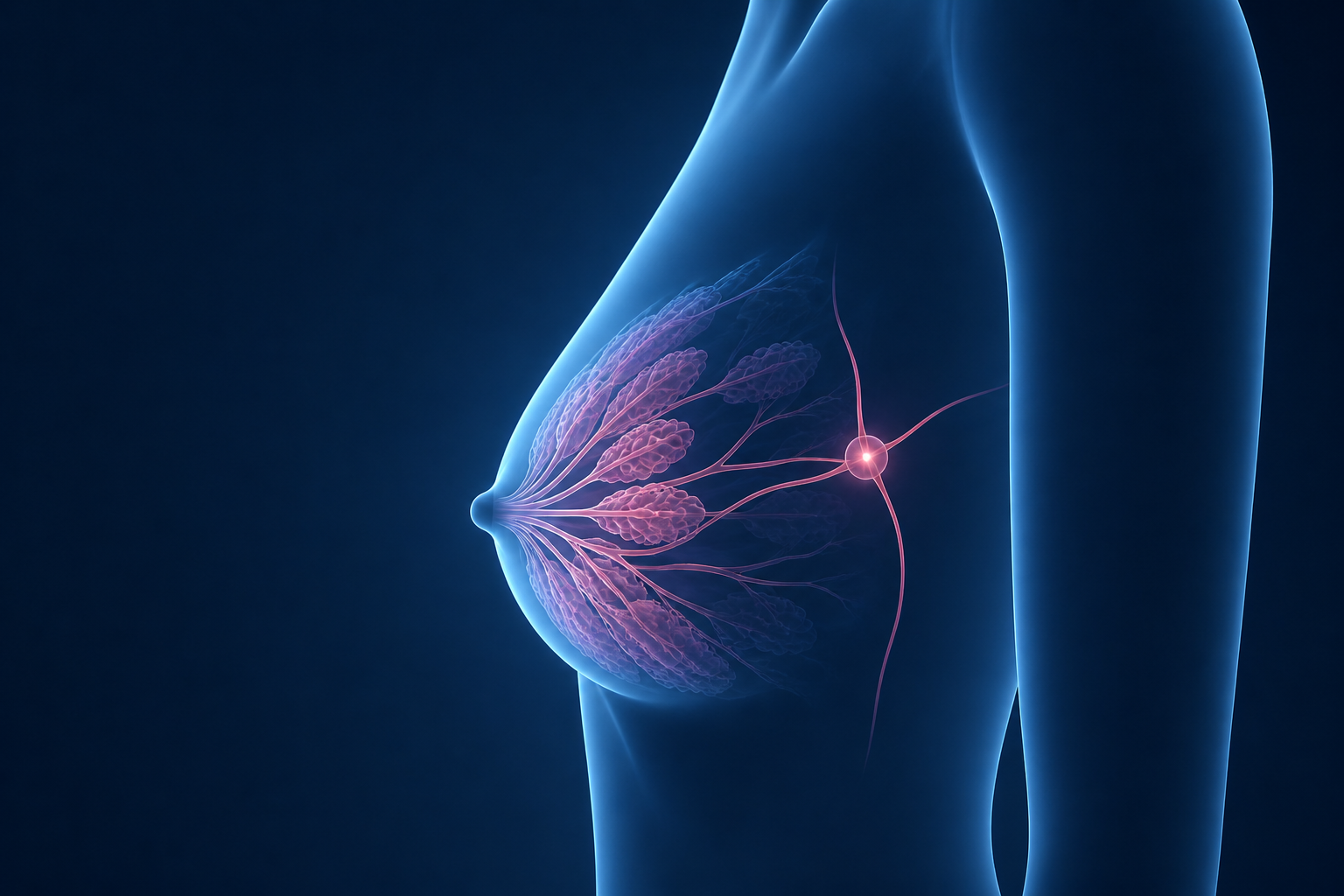
Breast imaging reports use a standardized language that can be difficult to interpret without a medical background. This section explains the structure of a typical report, what BI-RADS categories mean, and how to make sense of the terms your radiologist used.
BI-RADS: What Your Breast Imaging Score Means
When you get a mammogram, breast ultrasound, or breast MRI, your report usually includes a BI-RADS category. BI-RADS is the standard system radiologists use to describe breast imaging results. It helps your doctor understand what was found, how concerning it looks, and what should happen next.
A BI-RADS score does not automatically mean cancer. In fact, many BI-RADS findings are benign or only need follow-up.
| BI-RADS | What it Means | What Usually Happens Next |
|---|---|---|
| 0 | Incomplete | More imaging is needed |
| 1 | Negative | Routine screening |
| 2 | Benign | Routine screening |
| 3 | Probably benign | Follow-up imaging, usually in 6 months |
| 4A | Low suspicion | Biopsy recommended, most are benign |
| 4B | Moderate suspicion | Biopsy recommended |
| 4C | High suspicion | Biopsy recommended urgently |
| 5 | Highly suggestive of cancer | Biopsy needed quickly |
| 6 | Known cancer already proven by biopsy | Used for treatment planning |
BI-RADS 0 means the radiologist does not have enough information yet to give a final answer. This is common after a screening mammogram. It may mean you need:
- Additional mammogram pictures
- A breast ultrasound
- Comparison with older mammograms
This does not mean cancer. It means the radiologist needs a closer look.
BI-RADS 1 means your imaging is normal. No suspicious mass, calcifications, distortion, or abnormal finding was seen. You can return to your usual screening schedule.
BI-RADS 2 means something was seen, but it is clearly benign. Examples include:
- Simple cysts
- Benign calcifications
- Stable surgical changes
- Normal-appearing lymph nodes
No biopsy or special follow-up is usually needed.
BI-RADS 3 means the finding is very likely not cancer. The chance of cancer is less than 2%. Instead of doing a biopsy right away, the usual recommendation is follow-up imaging in about 6 months to make sure the finding stays stable.
Most BI-RADS 3 findings do not change and are eventually confirmed to be benign.
BI-RADS 4 means the finding is suspicious enough that a biopsy is recommended. This does not mean you definitely have cancer. BI-RADS 4 covers a wide range, which is why it is divided into subcategories.
The chance of cancer is low, and most biopsies come back benign.
The finding has more concerning features, but it is still not clearly cancer. A biopsy is needed, and the result must make sense compared with what was seen on imaging.
The finding looks very concerning, but a biopsy is still needed to confirm the diagnosis. If the biopsy comes back benign, your doctors may need to review carefully to make sure the correct area was sampled.
BI-RADS 5 means the imaging appearance is highly concerning for cancer. A biopsy is needed quickly. Even with BI-RADS 5, the final diagnosis still comes from the biopsy, not the imaging alone.
BI-RADS 6 is used when cancer has already been proven by biopsy. Imaging may be done to see the extent of disease, help plan surgery, or monitor treatment response.
The Most Important Thing to Remember
Your BI-RADS category is not just a number - it is a guide for what should happen next.
- BI-RADS 0: Get the additional imaging requested
- BI-RADS 3: Do not skip the 6-month follow-up
- BI-RADS 4 or 5: Schedule the biopsy
- BI-RADS 1 or 2: Return to routine screening
Part of the UnderstandMyScan Education Platform
This is one example of the physician-developed patient education available through an UnderstandMyScan breast center partnership.
Explore More Sample Education Explore a PartnershipWritten and clinically reviewed by Sean Litherland, MD, board-certified diagnostic radiologist.
Last reviewed: Next scheduled review:
Sources
- Newell MS, Destounis SV, Leung JWT, et al. ACR BI-RADS® v2025 Manual. Reston, VA: American College of Radiology; 2025.