
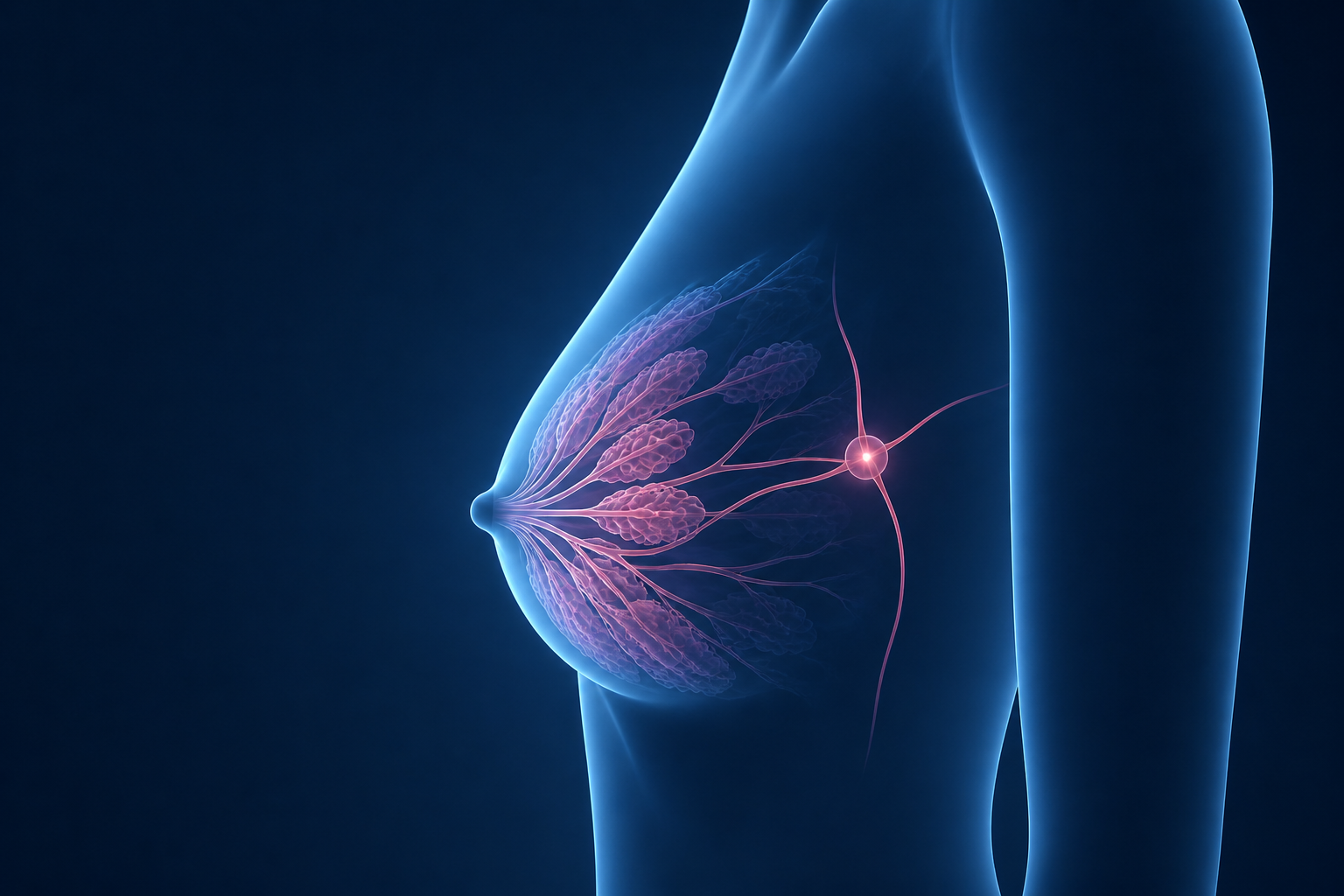
Two Types of Implants, Two Different Considerations
Silicone Gel-Filled Implants
The most common type. Soft gel closely resembles natural breast tissue in feel. Silicone implants require periodic imaging to screen for silent rupture - a rupture with no obvious symptoms where the implant shell breaks but the gel remains inside the fibrous capsule.
Saline-Filled Implants
Filled with sterile saltwater. A rupture is immediately apparent because the implant deflates visibly. Saline implants do not require routine rupture surveillance imaging.
When Is Implant-Related Imaging Needed?
Women with implants need the same routine screening mammograms as women without implants, following the same age and frequency guidelines. The implant modifies the technique, not the need.
Women who had a mastectomy for breast cancer and reconstruction with implants still need annual mammography of any remaining breast tissue and the opposite breast. The reconstructed side generally does not require breast cancer screening but may need implant integrity surveillance.
First ultrasound or MRI at 5–6 years after initial implant surgery, then every 2–3 years thereafter - regardless of symptoms. This is separate from breast cancer screening.
Any new breast symptom - lump, pain, change in shape or size - warrants evaluation regardless of implant status. Breast hardening (capsular contracture), shape change, or pain may indicate implant-related issues.
Women with silicone gel-filled implants should have their first imaging screen for rupture (either MRI or ultrasound) at 5–6 years after implant surgery, then every 2–3 years after that. Ultrasound is now accepted as an alternative to MRI for asymptomatic screening - it is less expensive and does not require contrast, though MRI remains the most sensitive option. If you have symptoms at any time, MRI is preferred.
How Mammography Works with Implants
Women with implants typically receive 8 images per mammogram (4 per side: 2 standard views + 2 Eklund displacement views per breast), compared to the usual 4 images for women without implants.
Eklund (Implant Displacement) Views
The cornerstone of mammography in women with implants. The technologist gently pushes the implant backward against the chest wall while pulling the native breast tissue forward around it. The compression paddle then compresses just the breast tissue - not the implant - allowing far more breast tissue to be visualized. Under-the-muscle (submuscular) implants are generally easier to displace; over-the-muscle implants may be more difficult. Even with Eklund views, implants obscure approximately 25% of breast tissue, which is why informing the technologist about your implants before the exam is essential.
Ultrasound with Implants
Not affected by the presence of implants. Ultrasound can evaluate both breast tissue and the implant itself. It is the primary tool for evaluating silicone implant rupture - the "snowstorm" appearance of silicone outside the implant shell is a classic ultrasound finding. Also used to evaluate any palpable lump or area of concern in a breast with an implant. The FDA now accepts ultrasound as an alternative to MRI for routine silicone implant rupture screening in asymptomatic women.
Breast MRI with Implants
The most sensitive method for detecting silicone implant rupture, particularly intracapsular rupture - the "linguine sign" on MRI (wavy lines inside the implant where the inner shell has broken but the outer fibrous capsule remains intact). For women who need MRI for breast cancer screening (high-risk patients) or extent-of-disease evaluation, MRI can be performed safely with implants using specialized implant sequences. MRI does not use radiation and provides excellent visualization of both implants and surrounding breast tissue.
Implant Rupture: What Imaging Shows
| Finding | Imaging Appearance | Significance |
|---|---|---|
| Intracapsular rupture (shell breaks, gel stays inside fibrous capsule) | "Linguine sign" on MRI (wavy lines inside implant) | Implant removal/replacement typically recommended |
| Extracapsular rupture (silicone escapes outside capsule) | "Snowstorm" on ultrasound; free silicone on MRI | Prompt surgical consultation recommended |
| Saline implant deflation | Clinically obvious; implant appears collapsed | No imaging needed - immediately apparent |
| Capsular contracture | Thickened, calcified capsule around implant | Primarily a clinical diagnosis; imaging may characterize severity |
When Should You Get It Checked?
What Happens Next
Frequently Asked Questions
Will my mammogram damage my implants?
No. Breast implants are designed and tested to withstand significant mechanical stress, including the compression used during mammography. The force applied by the mammogram paddles is not sufficient to rupture an intact implant under normal screening conditions. Millions of women with implants have mammograms every year without implant damage. If you have concerns, discuss them with your technologist before the exam - they are experienced with implants and will work carefully.
I have silicone implants. The FDA recommends MRI for rupture screening - is that still true?
The FDA updated its guidance in 2021. The current recommendation is that women with silicone gel-filled implants should have their first imaging screen for rupture (either MRI or ultrasound) at 5–6 years after implant surgery, then every 2–3 years after that. Ultrasound is now accepted as an alternative to MRI for asymptomatic screening - it is less expensive and does not require contrast, though MRI remains the most sensitive option. If you have symptoms at any time, MRI is preferred over ultrasound.
I had implant reconstruction after mastectomy. Do I still need breast imaging?
It depends on which side. The reconstructed mastectomy side generally does not require breast cancer mammography - there is no native glandular breast tissue remaining. However, you absolutely still need annual mammography of your remaining (opposite) breast - that risk doesn't go away. Your plastic surgeon and oncologist will also monitor your implant integrity through physical exam, and may recommend ultrasound or MRI to screen for silent rupture of silicone implants at the appropriate intervals. Make sure both your breast oncologist and plastic surgeon are aware of each other's recommendations.
Related Topics
Have a breast imaging report? A board-certified radiologist with extensive experience in breast imaging reviews every explanation before it reaches you.
Get My Report Explained