
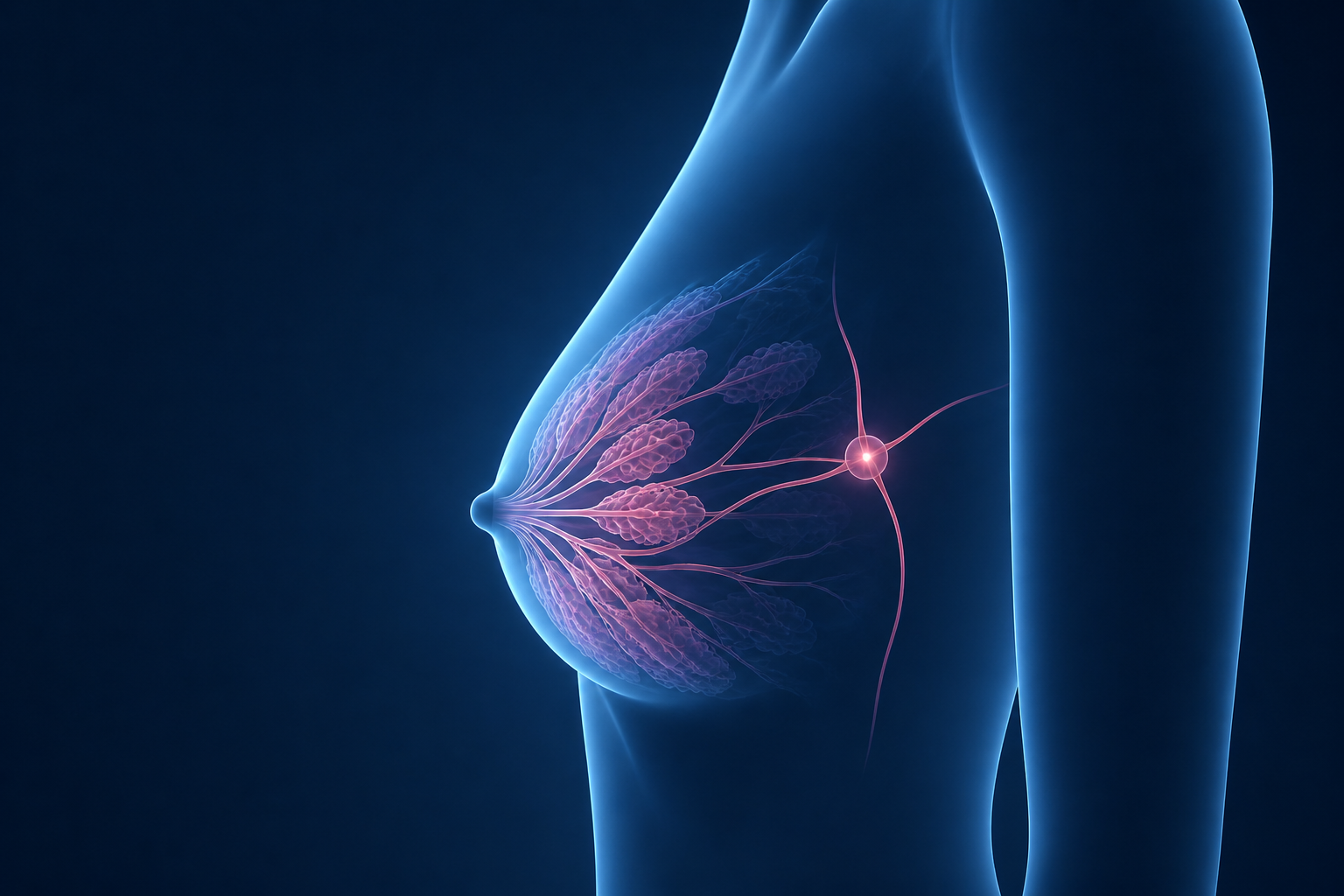
Your breast cancer risk depends on a combination of personal, genetic, and lifestyle factors. This section explains how risk is assessed, what the different risk categories mean, and how your risk level may affect your screening plan.
Articles in this section
What Increases Breast Cancer Risk?
A complete overview of fixed and modifiable risk factors - from age, genetics, and breast density to alcohol use, weight, and hormone therapy. Learn which factors matter most and when to ask for a formal risk assessment.
Family History & Genetics
BRCA1 and BRCA2 mutations can raise lifetime breast cancer risk to 69–72%. Learn how family history patterns raise risk, what other genes matter (PALB2, TP53, CHEK2, and more), and when to consider genetic counseling and testing.
What Is High Risk?
You are considered high risk if your lifetime breast cancer risk is 20% or greater - or if you have a BRCA mutation, LCIS, or history of chest radiation. Learn what qualifies, how risk models work, and what an enhanced screening plan looks like.
Have a breast imaging report? A board-certified radiologist with extensive experience in breast imaging reviews every explanation before it reaches you.
Get My Report ExplainedThis service provides educational explanations of radiology reports and does not constitute medical advice, diagnosis, or treatment. Medical decisions should always be made in consultation with your physician.