
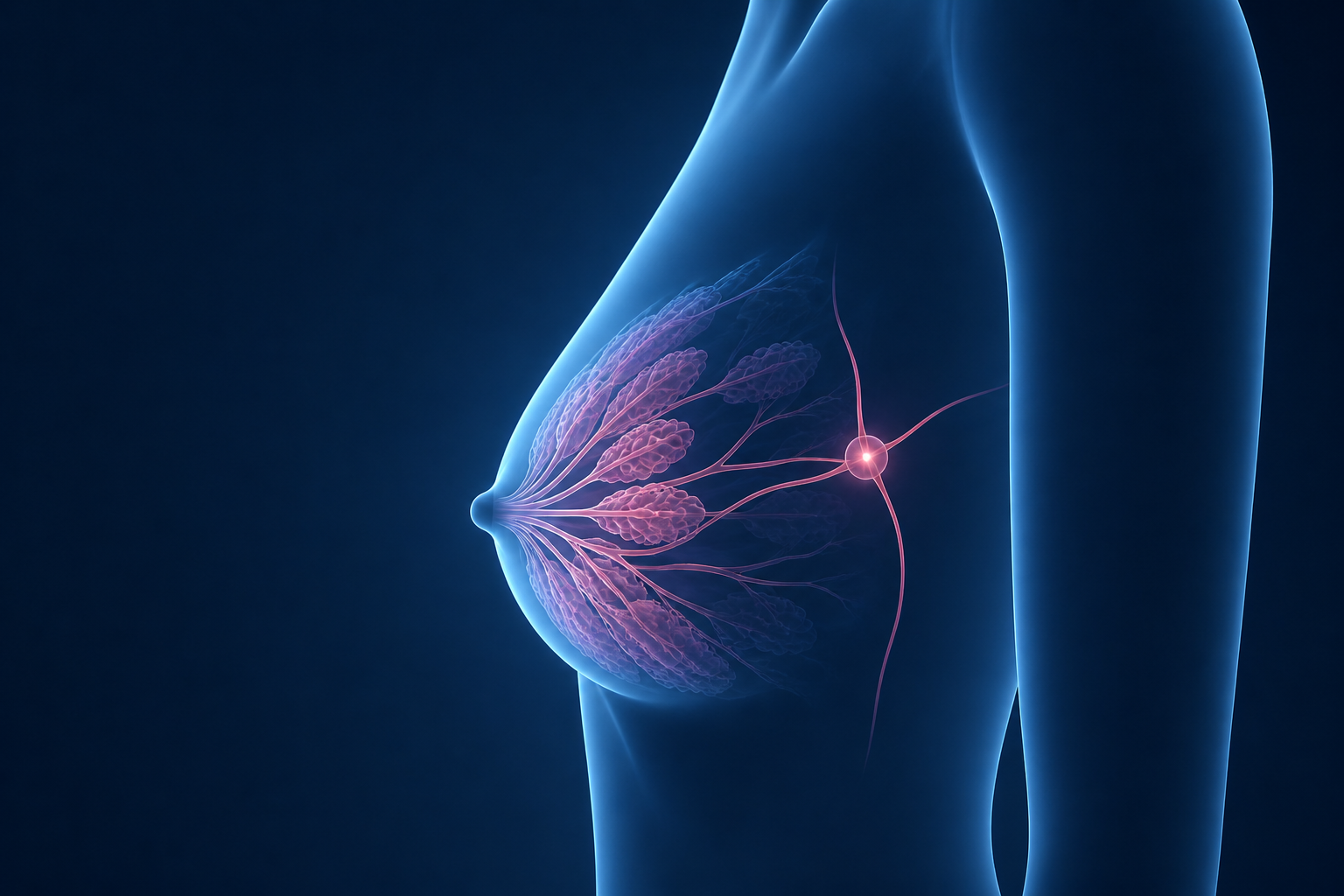
What Exactly Is a Mass?
In radiology, a "mass" is a three-dimensional lesion that occupies space and has outwardly convex borders - meaning it pushes outward into the surrounding tissue. A mass can be solid (tissue cells - benign: fibroadenoma, lymph node; malignant: invasive cancer), fluid-filled (a cyst - almost always benign if simple), or mixed - part solid and part fluid (complex cyst, necrotic cancer).
The first and most important question is: Is it solid or fluid-filled? Ultrasound answers this immediately, and the answer determines everything that follows.
How Radiologists Evaluate a Mass
When a mass is seen on imaging, radiologists look at a few key features to understand what it might be.
The two most important are:
Shape – Is it smooth and regular, or uneven?
Edges (margins) – Are the borders clearly defined or blending into surrounding tissue?
Masses that are smooth and well-defined are more likely to be benign (non-cancerous).
Masses with irregular shape or less defined edges may need closer evaluation to better understand what they represent.
Why This Can Feel Confusing
- Many of these features are subtle and can't be determined without imaging.
- Reports often use technical terms that can be difficult to interpret without context.
I review your imaging report and explain what these findings mean in clear, simple terms - so you understand what's important and what happens next.
Upload My ReportIs This Cancer?
Most masses found on breast imaging are benign - particularly in younger women where fibroadenomas and cysts dominate. However, invasive breast cancer presents as a solid mass. The features of the mass - especially irregular shape and spiculated margins - are what determine whether biopsy is needed.
Important: Imaging alone cannot definitively distinguish a benign solid mass from cancer. Any solid mass with suspicious features must be biopsied to confirm the diagnosis.
Common Next Steps
Should I Be Concerned?
- Most breast masses are benign (non-cancerous) and do not represent cancer.
- When a mass is seen on imaging, radiologists evaluate its appearance to determine the next step. Many masses have features that clearly indicate they are benign.
- If the appearance is not clearly benign or has changed over time, additional imaging - or sometimes a biopsy - may be recommended to better understand the finding.
- Comparing with prior imaging is one of the most important ways to determine if a mass is stable and benign.
Related Topics
Does your report mention a mass? The shape ("oval," "round," "irregular") and margin description ("circumscribed," "indistinct," "spiculated"), together with the BI-RADS category, tell you exactly how concerning the finding is. A board-certified radiologist with subspecialty breast imaging experience can walk you through it step by step.
Get My Report Explained