
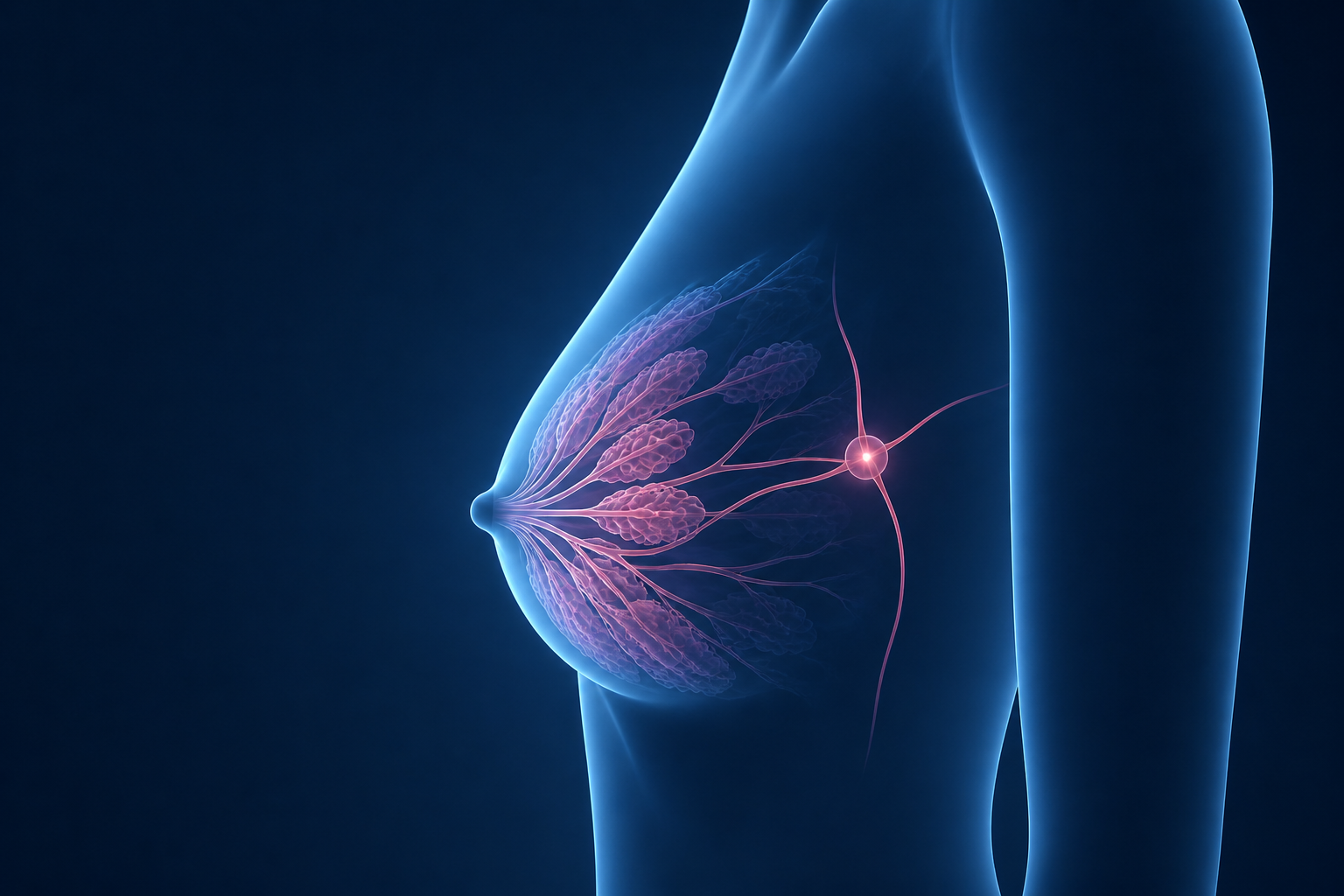
The Three Types - At a Glance
Simple Cyst
Completely anechoic (black on ultrasound), thin smooth walls, posterior acoustic enhancement. Definitively benign - no action needed.
Complicated Cyst
Internal echoes (debris, protein, old blood) but no solid component. 6-month follow-up ultrasound to confirm stability.
Complex Cyst
Thick walls, internal septations, mural nodule, or solid component. Biopsy required - though ~70–77% still come back benign.
What Exactly Is a Breast Cyst?
A breast cyst forms when fluid accumulates inside a small sac lined with breast tissue cells. Cysts range from microscopic to several centimeters and are extremely common, particularly in women in their 30s and 40s. They often fluctuate in size and tenderness with the menstrual cycle.
On ultrasound, a simple cyst appears completely anechoic (black - no internal echoes), has thin smooth walls, and shows posterior acoustic enhancement (bright signal behind it). This combination is so reliably benign that no further evaluation is needed.
Additional Cyst Types
Galactocele
A milk-filled cyst occurring in lactating or recently pregnant women. Entirely benign.
Oil Cyst
Contains liquefied fat from fat necrosis after surgery or trauma. BI-RADS 2 - definitively benign on mammography.
Is This Cancer?
A simple cyst has essentially zero cancer risk. A complicated cyst has less than 2% cancer risk. A complex cyst has an elevated cancer risk and requires tissue sampling - however, approximately 70–77% of complex cysts biopsied still come back benign. The biopsy is to confirm, not because cancer is expected.
What Happens Next
Return to routine annual screening mammography.
Short-interval imaging to confirm the cyst is stable.
Ultrasound-guided core needle biopsy or aspiration is recommended.
Can simultaneously confirm benign content and relieve discomfort.
When Should I Be Concerned?
Seek prompt evaluation if:
- A cyst is newly painful or rapidly enlarging
- Your report describes a complex cyst - biopsy should not be delayed
- A previously stable cyst changes significantly on follow-up imaging
- Aspiration yields bloody fluid - cytology is needed
Related Topics
Does your report mention "simple cyst," "complicated cyst," or "complex cyst"? The type and BI-RADS category together tell you the level of concern. A board-certified radiologist with subspecialty breast imaging experience can walk you through it step by step.
Get My Report Explained