
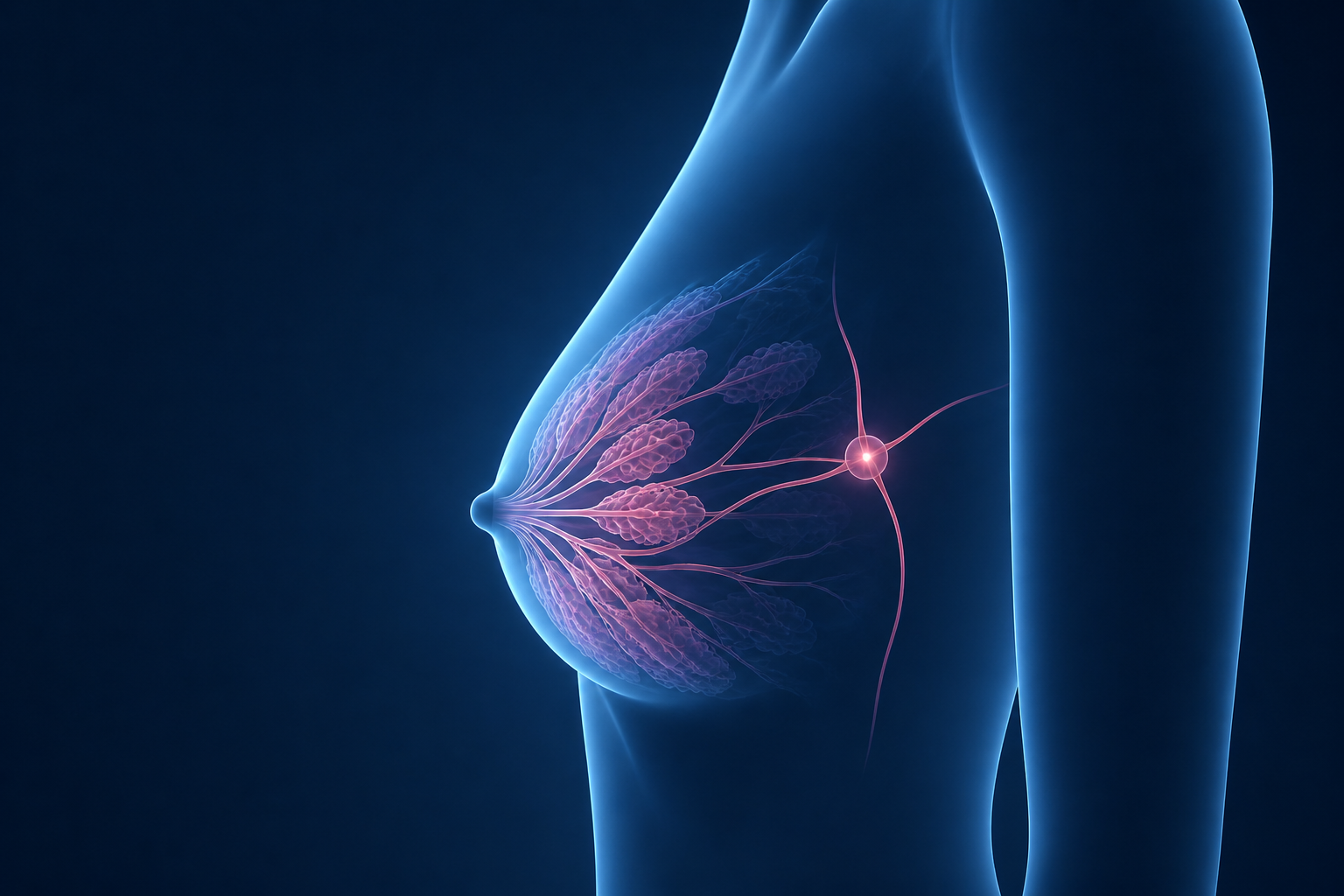
Understanding the Name
LCIS does not grow into surrounding breast tissue. It does not form a lump. It does not spread to lymph nodes. It is almost never detectable on imaging - it is found incidentally when a biopsy is performed for a different imaging finding.
Classic vs. Pleomorphic LCIS
Classic LCIS
- Treated as a risk marker, not cancer
- Annual mammography ± enhanced MRI
- Chemoprevention discussion
- Surveillance often preferred over excision (if concordant)
- Most common form
Pleomorphic LCIS
- More aggressive cellular features overlapping with high-grade DCIS
- Higher upgrade rate
- Surgical excision typically recommended
- Managed more like DCIS
Is This Cancer?
Classic LCIS is not cancer. It does not invade surrounding tissue or spread to lymph nodes. However:
Women with LCIS have approximately 8–10 times the average lifetime risk of developing breast cancer. This elevated risk affects both breasts equally and persists for decades - it is not limited to the breast where LCIS was found.
What Happens Next
Annual mammography with consideration of supplemental MRI. Chemoprevention discussion - tamoxifen can reduce future cancer risk by approximately 50%.
Excision needed to ensure no adjacent cancer was missed.
Treated more aggressively due to overlapping features with high-grade DCIS.
Risk remains elevated - ongoing mammography and possible MRI recommended.
Chemoprevention reduces future cancer risk by approximately 50%. Discuss this option actively with your doctor.
When Should I Be Concerned?
Take action if:
- Follow your doctor's recommendation on whether surgical excision or surveillance is appropriate - and understand the rationale
- Do not skip enhanced screening follow-up appointments
- Discuss chemoprevention actively - it is an underutilized, evidence-based option
- Seek care from a high-risk breast program if you have LCIS combined with other risk factors (family history, dense breasts, prior ADH or ALH)
Related Topics
Does your biopsy report mention LCIS? The most important determination is whether it is classic or pleomorphic, and whether it was concordant with the imaging finding. A board-certified radiologist with subspecialty breast imaging experience can walk you through it step by step.
Get My Report Explained