
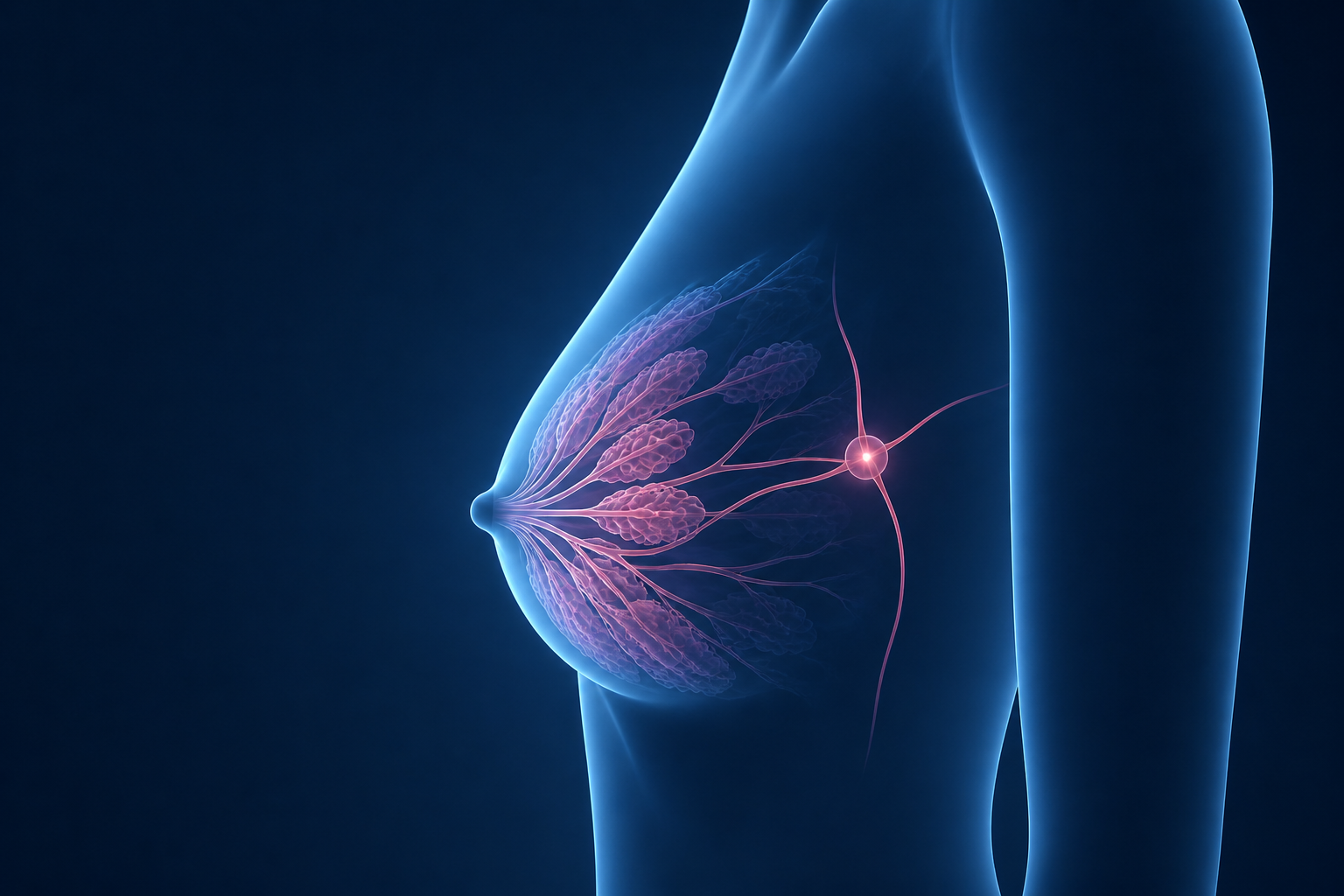
What Exactly Is ADH?
Hyperplasia means an overgrowth of cells - more cells than normal in a tissue. "Ductal" means this overgrowth is happening inside the milk ducts. "Atypical" means the cells look abnormal under the microscope - they fall somewhere between normal cells and DCIS. They are not cancerous, but they are not entirely normal either.
ADH is a pathology diagnosis - it is found on biopsy, not on imaging. The concern with ADH is twofold:
Two Reasons ADH Requires Follow-Up
Core needle biopsy samples only a small portion of tissue. ADH cells and DCIS cells look very similar - nearby DCIS may have been missed. The upgrade rate to DCIS or invasive cancer at surgical excision is 10–30%.
Women with ADH have approximately 4–5 times the average lifetime risk of developing breast cancer. This risk affects both breasts and persists long-term.
Key Numbers
Upgrade rate to DCIS or invasive cancer at surgical excision
Elevated lifetime breast cancer risk compared to average-risk women
Types and Variations
ADH Alone
Upgrade rate to malignancy at excision: 10–30%.
ADH with Other Atypia (ALH, LCIS)
Found alongside lobular neoplasia or other high-risk features - upgrade risk increases further. Surgical excision strongly recommended.
Extensive ADH
Found in multiple cores or involving extensive areas. Higher upgrade risk - surgical excision is the standard recommendation.
What Happens Next
Excision is the standard recommendation at most institutions because of the 10–30% upgrade rate.
Chemoprevention (tamoxifen or aromatase inhibitors) can reduce future breast cancer risk by approximately 50%.
Occurs in 10–30% of cases. Oncology referral and staging initiated.
Women with ADH and additional risk factors may qualify for annual breast MRI in addition to mammography.
When Should I Be Concerned?
Act promptly if:
- Surgical excision has been recommended - do not delay it
- You have additional risk factors (family history, dense breasts, prior biopsies)
- You have questions about chemoprevention - this is a meaningful risk-reduction option worth discussing with your doctor
Related Topics
Does your biopsy pathology report mention ADH? This is a high-risk finding that typically requires surgical excision - but it is not a cancer diagnosis. A board-certified radiologist with subspecialty breast imaging experience can walk you through what it means for your specific situation.
Get My Report Explained