
Quick Answer
- Breast swelling and fullness is one of the most common breast symptoms women experience - and in the majority of cases, it is completely benign.
- Hormonal changes tied to the menstrual cycle, pregnancy, and menopause are by far the most common causes.
- Swelling that affects only one breast, appears suddenly, doesn't resolve after your period, or is accompanied by skin changes or lumps needs to be evaluated.
What Is Breast Swelling?
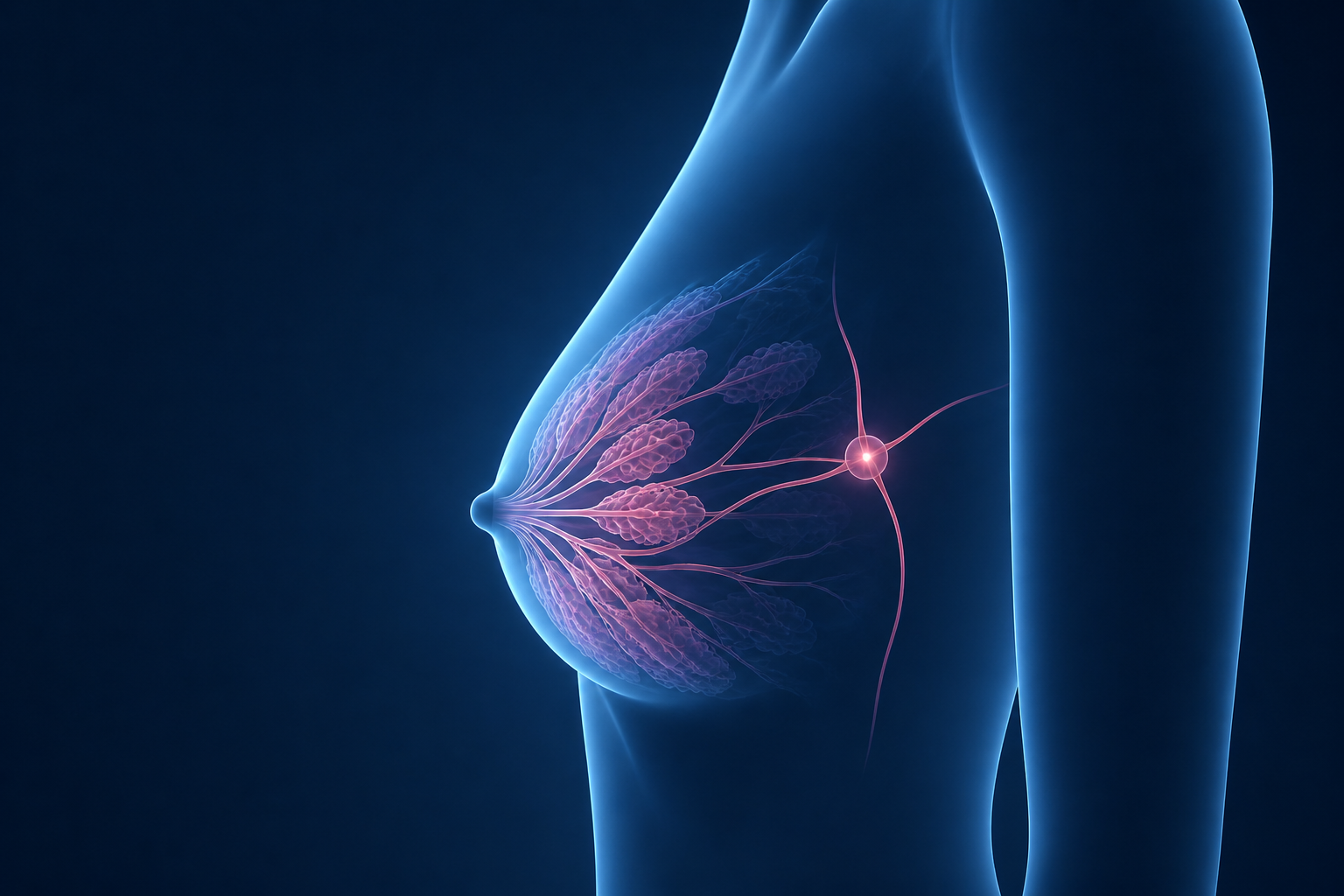
Breast swelling refers to an increase in the size, weight, or fullness of one or both breasts. It may be:
- Bilateral (both breasts) - usually hormonal in origin
- Unilateral (one breast) - more likely to have a specific underlying cause requiring evaluation
- Localized - swelling in one specific area of a breast
- Diffuse - affecting the entire breast
Swelling can be accompanied by tenderness, heaviness, warmth, firmness, and in some cases skin changes.
Common Causes
Hormonal (most common):
- Menstrual cycle - estrogen and progesterone cause the milk ducts and glands to enlarge and promote water retention; fullness typically resolves once menstruation begins
- Pregnancy - one of the earliest signs of pregnancy; breasts continue to enlarge throughout pregnancy as milk-producing glands develop
- Breastfeeding - engorgement (overfull breasts) is common, especially in the early weeks
- Menopause - hormonal fluctuations during perimenopause can cause temporary swelling and tenderness
- Hormonal medications - birth control pills, HRT, and fertility medications
Benign breast conditions:
- Fibrocystic breast changes - the most common benign breast condition; causes lumpy, tender, swollen tissue, particularly before menstruation
- Breast cysts - fluid-filled sacs that can cause localized swelling; very common in women aged 35–50
- Fibroadenoma - a benign firm tumor that can cause localized fullness
- Duct ectasia - widening of the milk ducts causing swelling near the areola, often with discharge
Infection:
- Mastitis - one breast becomes swollen, red, warm, and painful, often with fever; requires antibiotic treatment
- Breast abscess - a pocket of pus from untreated mastitis; requires drainage
Serious causes (less common):
- Inflammatory breast cancer (IBC) - causes one breast to rapidly become swollen, red, heavy, and warm with possible peau d'orange skin changes; can look exactly like a breast infection but does not respond to antibiotics; requires urgent evaluation
- Other breast cancers - invasive ductal and lobular cancers can sometimes cause localized swelling without a distinct lump
When Should You Get It Checked?
Routine hormonal swelling that resolves with your period is typically not a concern. See a doctor if:
- Swelling is only in one breast
- Swelling does not resolve after your period
- Swelling has appeared suddenly and is getting worse
- One breast is becoming visibly and persistently larger than the other
- Swelling is accompanied by redness, warmth, or skin changes (dimpling, thickening, peau d'orange)
- You have a fever alongside breast swelling
- Swelling is accompanied by a new lump or palpable thickening
- You have nipple discharge along with swelling
- There is swelling in your armpit or above your collarbone
- You are postmenopausal and experiencing new breast swelling
Unilateral breast swelling with redness, warmth, and skin changes that doesn't clearly improve within 48–72 hours of antibiotics should be imaged immediately to rule out inflammatory breast cancer.
How Doctors Evaluate It
- History - one or both breasts affected, relation to cycle, duration, associated symptoms (redness, pain, discharge, lump, fever), and medical/family history
- Clinical breast exam - degree and location of swelling, skin changes, nipple position, warmth, tenderness, and palpable lymph nodes
- Breast ultrasound - often the first imaging tool; can identify cysts, abscesses, masses, and tissue edema
- Mammogram - used for women over 30 or when a mass is suspected; detects underlying masses, calcifications, and tissue asymmetry
- Breast MRI - used when initial imaging is unclear or when inflammatory breast cancer is suspected
- Aspiration - a simple cyst can be drained with a fine needle in the office, confirming the diagnosis and providing relief
- Biopsy - if imaging identifies a suspicious solid mass
What Happens Next?
Common Questions About Breast Swelling
These are the most common questions patients have about breast swelling and fullness.
1. My breasts swell and become tender before every period. Is this normal?
Yes - premenstrual breast swelling and tenderness (cyclical mastalgia) is one of the most common breast symptoms. It is caused by the normal rise of estrogen and progesterone in the second half of your cycle, which stimulates the milk ducts and glands to enlarge and promotes water retention. It typically affects both breasts and resolves after your period starts. This type of swelling is not associated with breast cancer and generally requires no medical workup.
2. I have a tender lump and my breast is swollen - could it be a cyst?
Possibly. Breast cysts are very common and can cause localized swelling and tenderness that fluctuates with your cycle. They tend to feel smooth, round, and slightly soft when you press on them. An ultrasound can tell immediately whether a lump is a simple cyst (fluid-filled and benign) or a solid mass that requires further workup. If you have a new lump with swelling, it is worth getting it checked.
3. Could swelling in my breast be inflammatory breast cancer?
Inflammatory breast cancer (IBC) is rare - about 5% of all breast cancers. It typically causes rapid, progressive swelling in one breast (not both), along with redness, warmth, heaviness, and peau d'orange skin changes. The key warning signs are: it affects only one breast, it came on relatively quickly, it isn't relieved by your period, and it doesn't improve with antibiotics. If you have these features, don't wait - seek medical evaluation promptly.
Related Breast Topics
Have a breast imaging report? A board-certified radiologist with extensive experience in breast imaging reviews every explanation before it reaches you.
Get My Report ExplainedThis service provides educational explanations of radiology reports and does not constitute medical advice, diagnosis, or treatment. Medical decisions should always be made in consultation with your physician.