
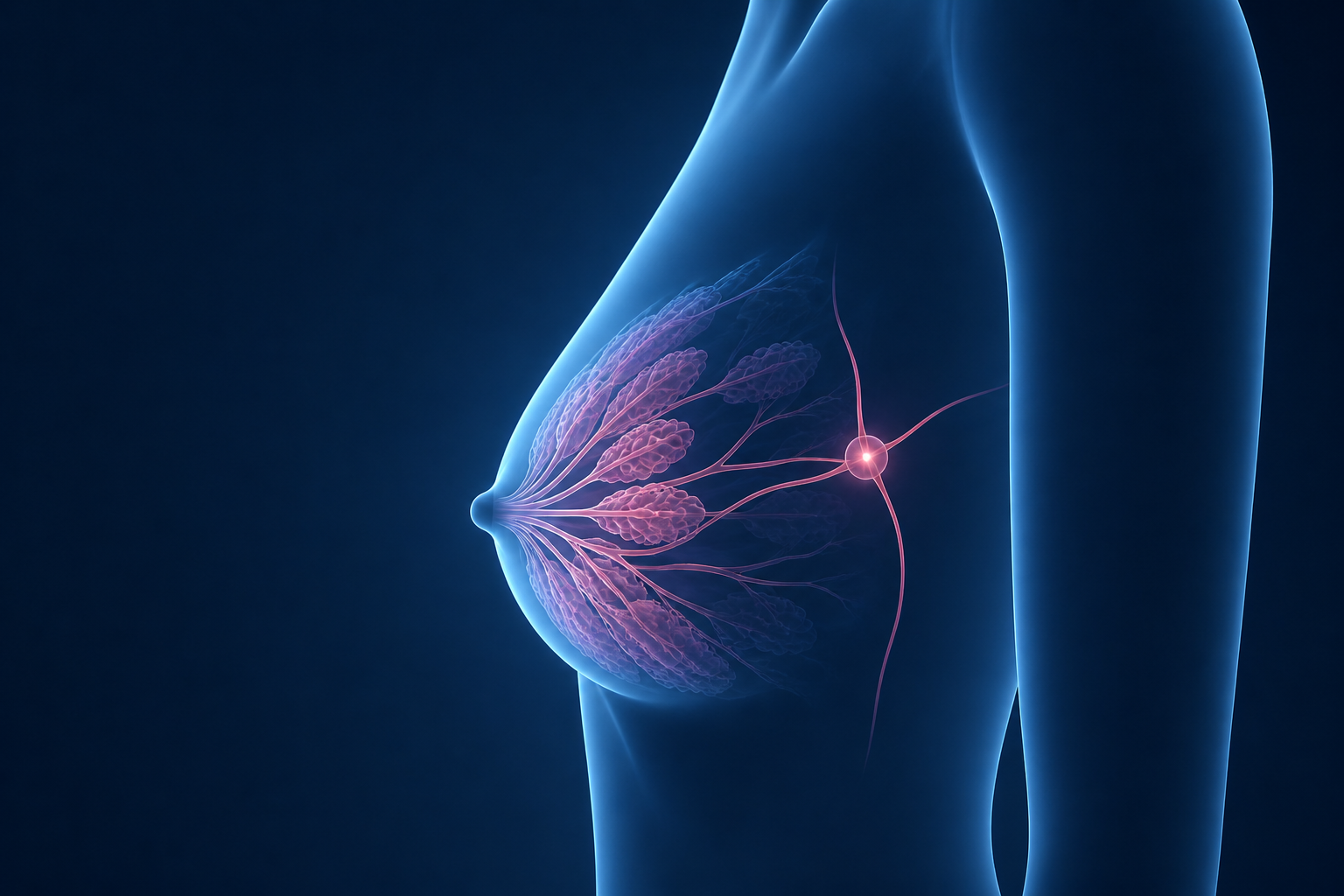
First, Take a Breath
If you are reading this because you saw something concerning in your report, were called back after a mammogram, or were told you may need more imaging, it is completely normal to feel anxious.
The question most people immediately ask is: “Do I have breast cancer?”
I wish I could give you a simple yes or no. But the honest answer is that I usually cannot answer that question from imaging alone -and no responsible educational website should pretend it can.
What Imaging Can Tell You
Mammograms, ultrasound, and breast MRI are very useful because they help radiologists decide whether a finding looks harmless, probably harmless, or suspicious enough to need more evaluation.
Clearly benign
Some findings look definitely non-cancerous, such as simple cysts or typical benign calcifications.
Probably benign
Some findings have a very low chance of cancer and may be watched with short-term follow-up imaging.
Needs tissue diagnosis
Some findings cannot be called benign with confidence, so a biopsy may be recommended.
The Honest Truth About Diagnosis
Breast cancer is diagnosed by looking at cells under a microscope. That is the pathologist’s role.
A radiologist can say that something looks benign, probably benign, suspicious, or highly suspicious based on imaging features. But when imaging cannot confidently prove that an area is benign, a biopsy may be needed to know for sure.
A biopsy recommendation does not mean you have cancer. It means the imaging finding deserves a more definite answer.
Most Findings Are Not Cancer
This is the part I want you to remember: most breast imaging findings are not cancer.
Many common report words sound frightening, but they are not diagnoses by themselves. A “mass” may be a cyst or fibroadenoma. “Calcifications” are often benign. An “asymmetry” may simply be overlapping normal tissue. A callback after a screening mammogram often means the radiologist needs a clearer look, not that cancer has been found.
Even when a biopsy is recommended, many biopsies come back benign. That does not mean the biopsy was unnecessary. It means the biopsy did its job: it gave a clear answer.
Why Reports Can Sound Scary
Breast imaging reports are written in medical language for your healthcare team. They are designed to be precise, not necessarily comforting.
Words like “irregular,” “suspicious,” “architectural distortion,” or “BI-RADS 4” can understandably cause fear. But these words describe how something looks on imaging and how it should be managed. They are not the same thing as a cancer diagnosis.
What Usually Happens Next
How Doctors Get to an Answer
This may happen on a screening mammogram, diagnostic mammogram, ultrasound, or MRI.
The report describes the finding and usually gives a BI-RADS category, which helps guide next steps.
This may be routine screening, more imaging, follow-up imaging, or biopsy.
The pathologist examines tissue under a microscope and determines whether the finding is benign, high-risk, pre-cancerous, or cancerous.
What I Would Tell You If We Were Talking
Frequently Asked Questions
Can imaging ever say something is definitely not cancer?
Yes. Some findings have classic benign imaging features and do not require biopsy. Examples include many simple cysts, certain benign calcifications, and stable benign-appearing findings.
If I need a biopsy, should I assume I have cancer?
No. A biopsy is a way to get a clear answer. Many biopsies are benign. The recommendation means the finding deserves tissue confirmation, not that cancer has already been diagnosed.
What part of my report should I focus on first?
Start with the impression, BI-RADS category, and recommendation. Those sections summarize what the radiologist thinks and what should happen next.
Related Topics
Have a breast imaging report? I can help translate the wording into plain English, explain what the recommendation means, and help you understand the next step -without pretending to diagnose cancer online.
Get My Report Explained